
Those late-night cravings for instant noodles and that one extra drink that will leave you feeling hungover the next day. If Monday through Friday is work, then Saturday and Sunday are party days. These corporate organizations don’t allow us to take a break, and neither does our lifestyle. And if we get sick, do we have any other options than popping paracetamol? All of this is handled not just by our brain, but also by our liver. Our brain will undoubtedly breathe a sigh of relief after taking paracetamol, but what about our liver?
Studies have suggested that Hepatotoxicity from paracetamol overdose, whether intentional or unintentional, is the most common cause of Drug Induced Liver Injury and is becoming a global concern. Apart from that, packaged foods, regular alcoholic beverage consumption, and other lifestyle choices can have an impact on our liver’s function and can develop problems such as indigestion, blotting, and cramping.
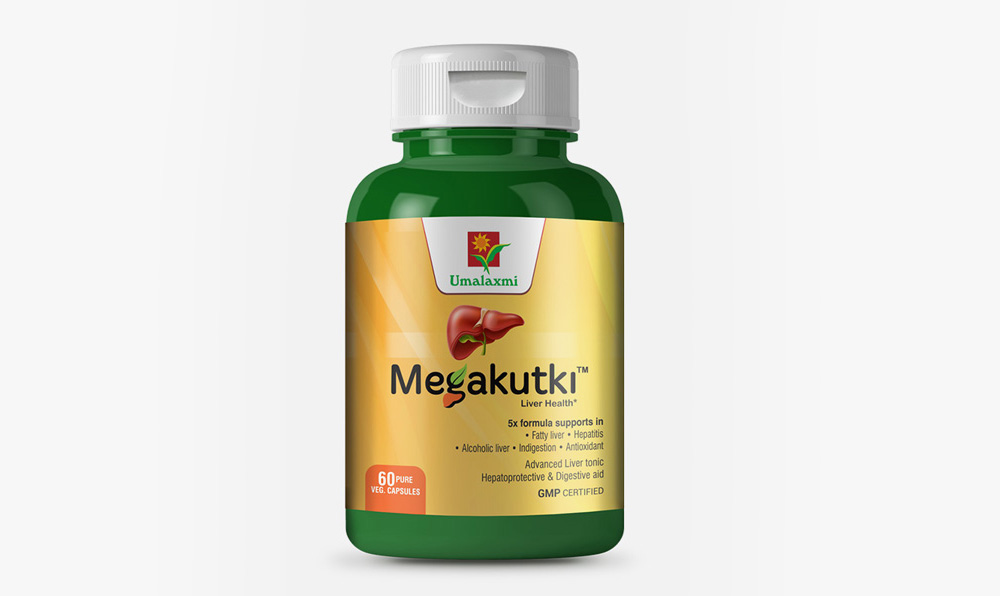
Megakutki, a product of Umalaxmi Organics, is a blend of 11 natural herbs identified for their hepatoprotective properties. According to studies done on this product, Megakutki might be effective in treating drug-induced liver damage, jaundice, hepatitis, indigestion, flatulence, bloating, and cramps.
What Megakutki has to offer?
Kutki (Picrorhiza kurroa): This herb is the major component of Megakutiki has been reported to have anti-diabetic, antibacterial, antioxidant, anticancer, anti-inflammatory, and hepatoprotective properties. Its dried roots and rhizomes are being used to treat a variety of conditions, including spleen disease, liver disease, and allergy issues.
Kalmegh (Andrographis paniculata): Andrographis paniculata has been shown in studies to lower fundamental elements of oxidative stress, inflammatory processes, and apoptosis, hence protecting against methotrexate-induced hepatotoxicity.
Bhumi Amlaki (Phyllanthus niruri): According to research, the antiangiogenic activity of P. niruri, as well as the modulation of adipocytokines and the reduction of adipogenic gene expression, may be responsible for its preventive properties against non-alcoholic fatty liver disease and it’s further contribution in hepatoprotection.
Punarnava (Boerhaavia diffusa): A condition for which Punarnava has frequently been utilized in publications on ethnopharmacology or in traditional systems of medicine is jaundice. Several researchers have assessed Punarnava ‘s hepatoprotective capability against various toxins to demonstrate its efficacy in treating hepatic diseases and protecting the liver from hepatotoxins. The hepatoprotection offered by Punarnava is demonstrated in every investigation.
Guduchi (Tinospora cordifolia): In numerous research studies, Guduchi has been shown to have a hepatoprotective effect and is utilized to treat liver damage and Jaundice.
Amla (Phyllanthus emblica): Anti-Oxidant, Anti-Inflamatory Bioactive molecules of amla have been observed to protect the liver from oxidative stress and liver fibrosis, in many studies.
Baheda (Terminalia bellirica): Ellagic acid produced by Terminalia bellirica is effective at protecting the liver. In addition to this polyphenolic compound, Terminalia bellirica also contains a variety of other chemicals with anti-inflammatory and antioxidant activities. Long-term use of extract of Terminalia bellirica can enhance liver function overall.